
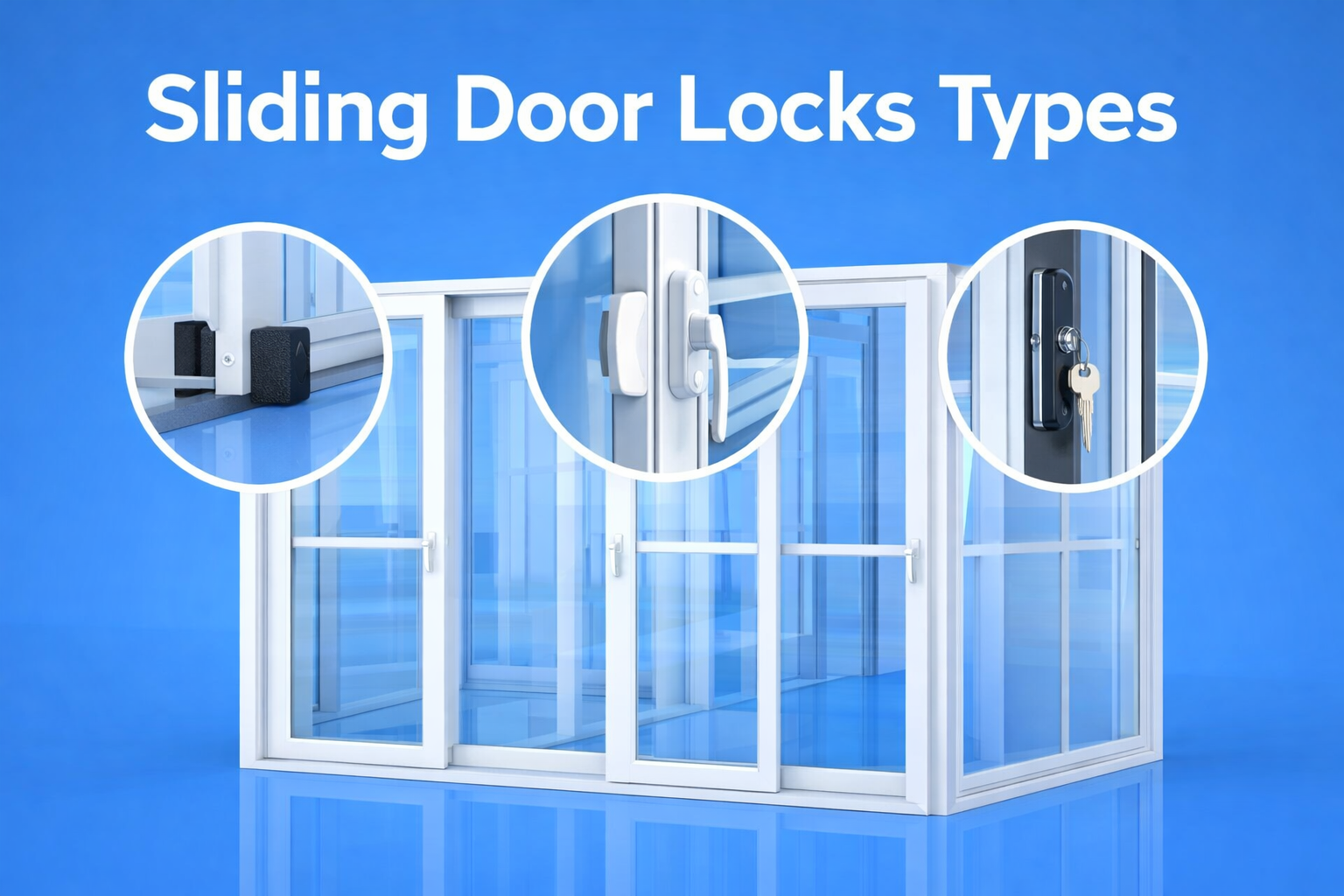
Sliding doors add elegance, natural light, and functionality to homes and commercial spaces. However, their large glass panels and smooth operation also make them a potential security concern if not properly locked. Choosing the right sliding door lock type is essential to protect your property while maintaining convenience and style.
In this blog, we’ll explore different sliding door lock types, their advantages, applications, and how to choose the best one for your needs. Whether you are upgrading your existing doors or installing new ones, this guide will help you make an informed decision.
Why Sliding Door Locks Matter
Sliding doors are often targeted by intruders because:
- They can be lifted off tracks if not secured.
- Standard factory locks may not provide sufficient strength.
- Glass panels can be vulnerable without proper reinforcement.
Installing the right lock:
- Enhances security
- Improves peace of mind
- Adds value to your property
- Protects your family and belongings
Main Types of Sliding Door Locks
Here is a detailed overview of the most commonly used sliding door locks:
Lock Type | Description | Best For | Security Level |
Mortise Lock | Built into the door frame, operated by a latch | Residential & commercial sliding doors | High |
Cylinder Lock | Uses a key cylinder to lock the door | Main entrance sliding doors | High |
Hook Lock | Uses a hook-shaped bolt that locks into the frame | Heavy sliding doors, aluminium doors | Very High |
Deadbolt Lock | Solid bolt that slides into the frame | Added security | Very High |
Foot Bolt Lock | Installed at the bottom of the door | Extra security reinforcement | Medium |
Clamp Lock | Attaches externally to the door track | Temporary or rental properties | Medium |
Smart Lock | Operated using mobile apps or biometrics | Smart homes | Very High |
1. Mortise Locks
Mortise locks are the most commonly used lock type for sliding doors. They are installed inside the door frame, making them difficult to tamper with.
Key Features:
- Built-in design
- Durable and strong
- Compatible with most sliding doors
- Can be keyed or thumb-turn operated
Best For:
Homes, offices, and patio sliding doors.
2. Cylinder Locks
Cylinder locks use a key-operated cylinder mechanism and are often combined with mortise locks for added security.
Advantages:
- Strong protection
- Easy to operate
- Compatible with master key systems
3. Hook Locks
Hook locks are one of the most secure sliding door lock types. The hook-shaped bolt prevents the door from being forced open sideways.
Why Choose Hook Locks?
- High resistance against forced entry
- Perfect for aluminum and glass sliding doors
- Common in commercial properties
4. Deadbolt Locks
Deadbolt locks provide a solid locking mechanism that cannot be easily pushed back.
Feature | Benefit |
Solid steel bolt | High strength |
Manual operation | Simple to use |
Extra security layer | Works with other locks |
5. Foot Bolt Locks
Foot bolt locks are installed at the bottom of the sliding door and secure the door into the floor track.
Benefits:
- Excellent as secondary security
- Prevents door lifting
- Easy installation
6. Clamp Locks
Clamp locks are external devices that clamp onto the door track to prevent movement.
Best Use Cases:
- Rental properties
- Temporary installations
- Quick security solutions
7. Smart Sliding Door Locks
Smart locks bring modern technology to sliding door security.
Feature | Description |
Remote access | Control via smartphone |
Biometric entry | Fingerprint unlocking |
Smart alerts | Security notifications |
Automation | Integrates with smart homes |
Comparison Table: Sliding Door Lock Types
Lock Type | Installation | Cost | Durability | Security |
Mortise Lock | Moderate | Medium | High | High |
Hook Lock | Moderate | Medium-High | Very High | Very High |
Deadbolt | Easy | Low-Medium | High | Very High |
Foot Bolt | Easy | Low | Medium | Medium |
Clamp Lock | Very Easy | Low | Low-Medium | Medium |
Smart Lock | Advanced | High | High | Very High |
How to Choose the Right Sliding Door Lock
Consider these factors before selecting a lock:
- Door Material:
Glass, aluminum, or uPVC doors need compatible locks. - Security Level Required:
Main entry doors require stronger locks like hook or deadbolt locks. - Budget:
Choose based on balance between cost and protection. - Ease of Use:
Smart locks offer convenience, while traditional locks are simpler. - Weather Resistance:
Outdoor sliding doors need corrosion-resistant locks.
Common Sliding Door Lock Problems & Solutions
Problem | Solution |
Loose handle | Tighten screws or replace hardware |
Lock not aligning | Adjust the door rollers |
Key not turning | Lubricate or replace cylinder |
Door lifting | Install foot bolt or anti-lift device |
Why Choose Weatherseal for Sliding Door Solutions?
At Weatherseal, we understand the importance of safety and durability. Our sliding door systems are designed with:
- Premium-quality locking mechanisms
- High-grade aluminum frames
- Long-lasting weather-resistant materials
- Custom security options
We prioritize both security and design, ensuring your sliding doors remain safe, stylish, and functional.
Frequently Asked Questions (FAQ)
Q1. Which sliding door lock is the most secure?
Hook locks and deadbolt locks provide the highest level of security.
Q2. Can I add extra locks to my existing sliding door?
Yes, foot bolts, clamp locks, and secondary deadbolts can be added.
Q3. Are smart locks safe for sliding doors?
Yes, when installed correctly, smart locks offer excellent security and convenience.
Q4. How often should sliding door locks be replaced?
Typically every 5–10 years, depending on usage and wear.
Final Thoughts
Understanding different sliding doors locks types helps you make the right security choice for your home or business. From traditional mortise locks to modern smart locks, each option serves a unique purpose. A well-secured sliding door not only protects your space but also enhances your confidence and comfort.
For premium sliding door solutions with advanced locking systems, explore www.weatherseal.com and discover doors that combine security, strength, and style.