
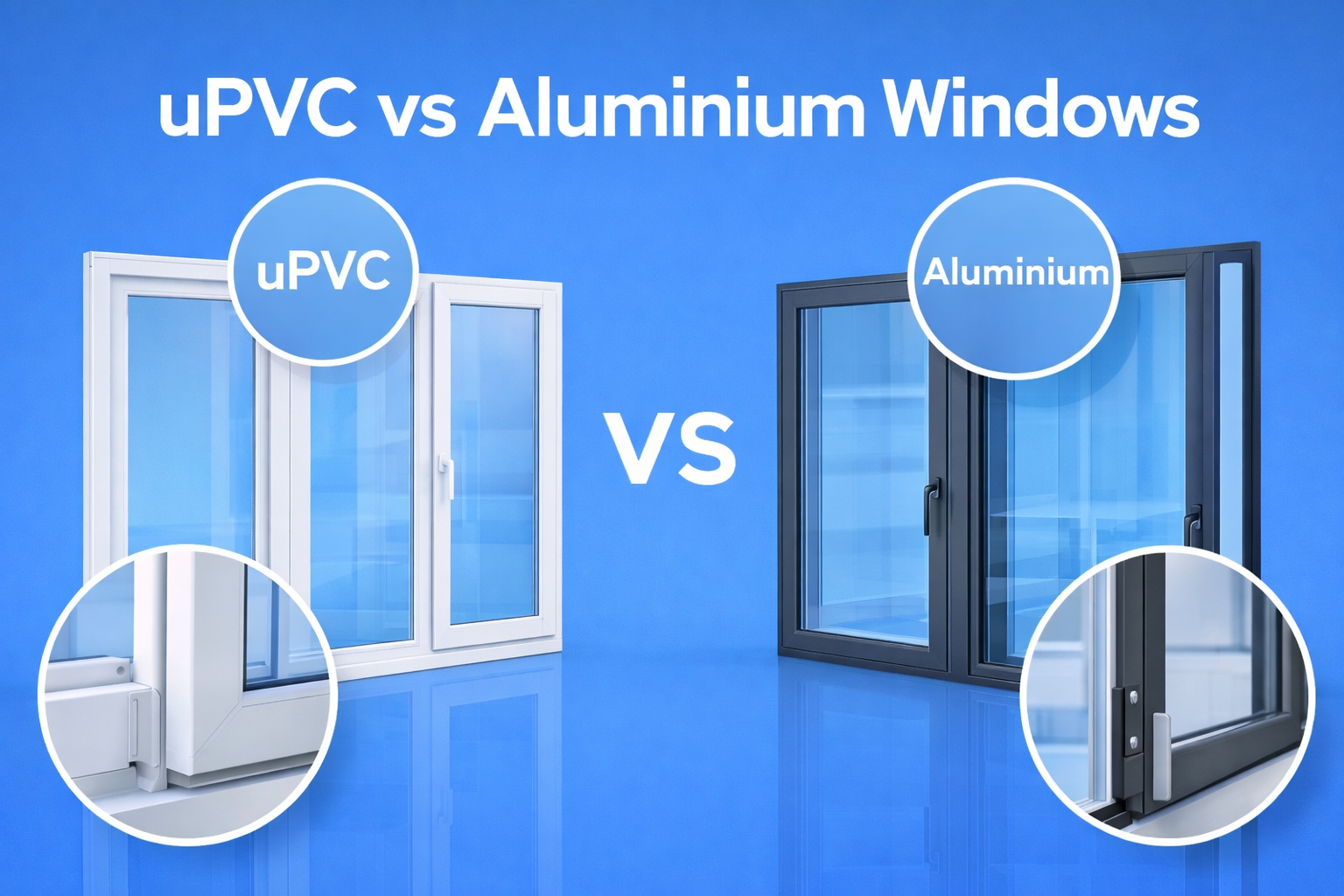
uPVC Windows vs Aluminium Windows
Your windows say more about your space than you might think. Beyond their functional role, windows significantly influence your home’s comfort, aesthetics and energy efficiency. While wooden windows have been a standard choice for decades, modern homeowners are increasingly opting for materials like uPVC and aluminium for their versatility.
Let’s compare uPVC windows and aluminium windows to help you design your space mindfully.
Understanding the Material
uPVC stands for Unplasticized Polyvinyl Chloride. It is a hard, rigid plastic with no added plasticisers. Its composition makes it a long-lasting, weather-resistant material.
Aluminium is lighter in weight than other metals like steel or copper. Yet, it retains excellent strength and durability for decades.
Durability
Both uPVC and aluminium windows are known for their durability and are suitable for most climatic conditions in India. They provide enduring resistance against rust, corrosion, termites, humidity, sunlight, and moisture (rains). They also don’t peel, bend or warp.
However, their functioning might differ in coastal regions. uPVC remains unaffected by salt-laden air as it doesn’t contain any metal. It remains chemically inert. Aluminium, being a metal, may become prone to reaction with salt and moisture in seaside regions. A high-quality protective finish such as powder coating or anodising can help aluminium windows withstand corrosive effects.
Structural Integrity
Despite sharing similar durability, aluminium windows excel in structural integrity. The reason is that aluminium has an excellent strength-to-weight ratio, making it ideal for large windows, door systems and glass panels. It is less likely to deform under heavy loads due to its rigidity.
uPVC requires sturdy internal steel reinforcement to give comparable structural stability to large or wide-opening windows.
Visual Appeal
uPVC windows are a perfect choice for timeless and elegant aesthetics for your space. Their different styles, colours and woodgrain finishes can seamlessly complement versatile décor themes. They have thicker frames for structural integrity.
If you are looking for a minimalistic, sleek and sophisticated look, then aluminium windows are a great match. When combined with larger glass panels, their slim frames maximise the natural light and give unobstructed views. They are also available in various finishes and powder-coating colours.
Thermal Insulation
Due to varied climate and geography, Indian homes need to have windows with thermal insulation for consistent indoor temperature.
uPVC has natural thermal insulation properties as it is a poor conductor of heat. It reduces heat gain in summers and heat loss in cold seasons. uPVC windows maintain a comfortable temperature inside your home no matter what the weather outside is.
On the other hand, aluminium is an excellent conductor of heat. As a result, conventional aluminium window frames readily transfer heat between the outdoors and indoors. Your interiors may feel warmer in summers and colder in winters. Aluminium windows need a separate insulation barrier in the form of thermal break technology and double-glazed glass.
Sound Insulation
uPVC naturally absorbs sound vibrations. If your home is located on a busy street or noisy neighbourhood, uPVC windows can shield against undesirable sounds. You can enhance their effectiveness further by using airtight seals and double-glazed glass.
Aluminium is comparatively less effective in acoustic insulation. You will need to pair it with laminated acoustic glass, thermally broken frames and high-quality weather seals to achieve desired levels of noise reduction.
Energy Efficiency
uPVC windows keep your space cooler in summers and warmer in winters. It reduces dependency on air conditioners and heating appliances. This leads to superior energy efficiency and lower electricity bills.
Although aluminium windows can deliver similar energy efficiency, this performance comes at an additional cost due to the need for thermal break technology and specialised glazing.
Maintenance
Both uPVC and aluminium windows need low maintenance. You can clean them with water, mild soap/detergent and a soft cloth every few months.
uPVC doesn’t need painting, polishing or sealing. However, aluminium may require occasional protective surface coating, especially in coastal regions, to extend their lifespan.
Environmental Impact
uPVC and aluminium are eco-friendly and 100% recyclable materials at the end of their lifespan. They are built to last, reducing the need for recurring maintenance and replacements over time.
uPVC windows have a slight advantage over aluminium ones for maximising energy savings.
Whether you choose uPVC or aluminium, you are contributing to a more sustainable economy.
Security
Windows are one of the most common entry points for intruders. uPVC and aluminium windows are designed with a high level of security in mind. Both uPVC and aluminium windows are engineered for strength, making them a strong barrier against forced entry.
When they are fitted with advanced multi-point locking systems, safety glass and other reinforced hardware, they provide even tighter protection.
Conclusion
It is difficult to decide a clear winner – uPVC or aluminium. They both give long-lasting performance and are modern alternatives to traditional wooden windows. The choice depends on the location of your home, your aesthetic and functional preferences and budget. Make sure that your windows are sourced from reputed manufacturers and installed by experienced professionals.
FAQs
1. Are uPVC and aluminium windows better than wooden ones?
Wooden windows are susceptible to frequent wear and tear under harsh climatic conditions. They are high maintenance and less energy efficient.
uPVC and aluminium windows are highly durable and weather-resistant. They require minimal upkeep and give more energy savings. These benefits make them a better alternative to wooden windows.
2. Which windows should be chosen for thermal and noise insulation?
uPVC has inherent thermal and sound insulation properties. However, you can equip aluminium windows with thermal and acoustic technology barriers at an additional cost to achieve comparable results.
3. Are uPVC windows stronger than aluminium windows?
Aluminium has naturally stronger structural integrity than uPVC. It is a preferred choice to support larger and heavier glass panels with slimmer frames. A high-quality uPVC frame is reinforced with galvanised steel, making it suitable for standard-sized windows.
4. Which windows are the best for different regions and climates in India?
Both uPVC and aluminium windows are ideal for most Indian homes across regions and climates.
However, it is advisable to opt for uPVC for coastal regions as it has stronger endurance to a salt-laden climate than aluminium. Aluminium windows are a good choice for spaces that have expansive outdoor views or need superior structural strength in slimmer frames.

About the Author
Manzoor Shaik is a Technical Head – uPVC Windows and Doors at Weatherseal by Asian Paints with 15+ years of experience in the uPVC windows and doors industry. His expertise includes uPVC window systems, fenestration solutions, energy-efficient glazing, and modern window technologies for residential and commercial projects